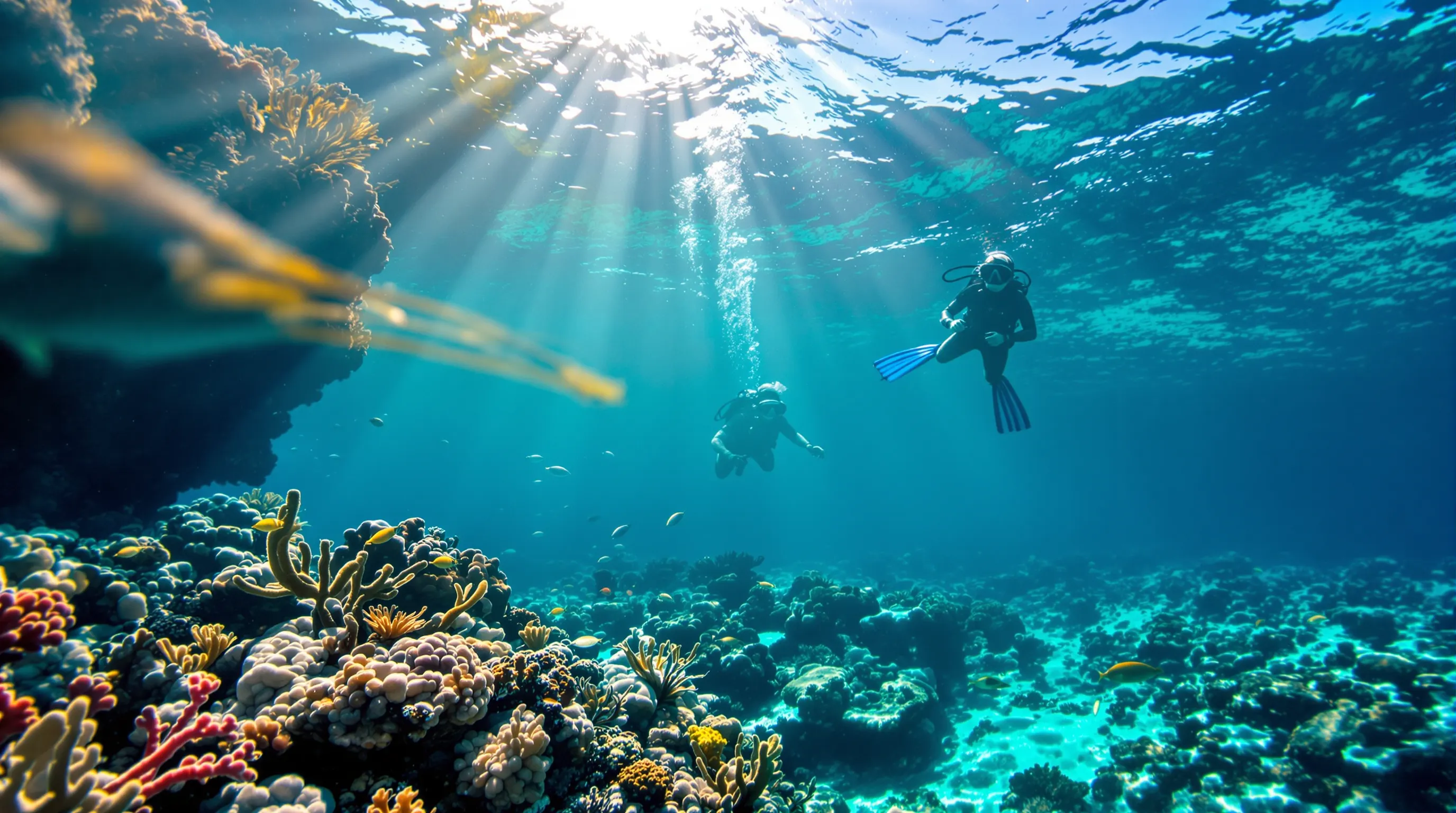
What the Pros Actually Do to Nail Underwater Photography in the Mediterranean
The Mediterranean offers exceptional conditions for underwater photography with its crystal-clear waters and unique biodiversity. Each year, over 2 million divers explore its seabed, but only seasoned photographers master the techniques to capture the magic of this ecosystem. From the posidonia seagrass meadows to Corsica's dramatic drop-offs and historic shipwrecks, the Great Blue harbours unexpected visual treasures. This article reveals professional secrets to transform your dives into proper successful photo sessions.
Mastering Technical Settings Specific to the Mediterranean
Underwater photography in the Mediterranean requires precise settings adapted to its unique characteristics. The Mediterranean water's colour temperature ranges from 5500K to 6500K depending on depth, requiring constant white balance adjustments. Professionals systematically use manual mode with f/8-f/11 aperture to optimise sharpness on coralligenic reefs. Shutter speed remains above 1/125s to freeze movements of pelagic fish like barracuda. ISO never exceeds 800 to preserve image quality in waters sometimes laden with particles. These settings capture the exceptional chromatic richness of red gorgonians and colourful sponges typical of our coastlines.
The Crucial Importance of Exposure Compensation
In the Mediterranean, brightness changes dramatically depending on sun orientation and water transparency. Professionals apply overexposure of +0.7 to +1.3 stops to compensate for natural light absorption. This technique reveals detail in shadowed areas of rocky drop-offs and enhances colours of nudibranchs and other small colourful creatures that populate our Mediterranean seabed.
Choosing Equipment Suited to Mediterranean Conditions
Photographic equipment must withstand Mediterranean specifics: high salinity (38-39‰), significant thermal variations and sometimes heavy swells. A waterproof housing certified to 60 metres minimum is essential, with seals checked before each dive. External strobes remain indispensable beyond 10 metres depth, even in bright conditions. A 60mm or 100mm macro lens perfectly captures Mediterranean microfauna, whilst a 14-24mm wide-angle lens enhances underwater landscapes and fish schools. Batteries drain 30% faster in cold water (14-16°C in winter), requiring waterproof spare batteries. A red correction filter proves useful between 5 and 15 metres to restore natural tones.
Identifying the Best Spots and Shooting Conditions
The Mediterranean boasts exceptional sites for underwater photography, each with its own characteristics. The Cerbère-Banyuls marine reserve offers exceptional visibility (often 30-40 metres) and preserved biodiversity. Marseille's Calanques combine spectacular drop-offs with shallow areas rich in marine life. The Corsican coast, particularly around Bonifacio, presents unique geological formations and deep blue waters. Professionals favour morning outings (7am-10am) when the sea is calm and light is angled. The May-October period guarantees the best conditions, with water temperatures of 18-26°C and optimal visibility. Low tide coefficients (20-40) limit currents and facilitate stabilisation for precise macro photography.
Optimal Timing According to Mediterranean Seasons
Mediterranean autumn (September-November) offers ideal conditions with still-warm water (20-24°C), excellent post-summer visibility and intense marine activity. Fish gather before winter, facilitating spectacular school photography. Spring sees many species reproduce, offering unique photographic behaviours but requiring discretion and respect for natural cycles.
Practical Tips for Optimising Your Photo Trips
A successful underwater photo outing in the Mediterranean requires meticulous preparation. Average budget amounts to £120-160 per day including guided diving, equipment hire and boat transport. Book 48 hours ahead in high season to guarantee your spot on the best sites. Plan maximum 2-3 dives daily to optimise creativity without excessive fatigue. Photographic equipment represents a £1,600-4,000 investment for a complete advanced amateur kit. Dive centres specialising in underwater photography offer 3-5 day courses (£320-640) supervised by professionals. These courses include theory, guided practice and image post-processing. The season runs from April to November, with peak activity in September-October offering the finest weather conditions and maximum biodiversity.
Frequently asked questions
What's the best time for underwater photography in the Mediterranean?
September-October offers optimal conditions with still-warm water (20-24°C), excellent post-summer visibility and intense marine activity. Fish gather before winter, facilitating spectacular shots. Spring (April-June) also presents good conditions with cooler but clearer water.
What budget should I plan for starting Mediterranean underwater photography?
Expect £1,600-2,400 for basic kit: waterproof camera or housing, macro and wide-angle lenses, external strobes. Add £120-160 per outing for guided diving. Underwater photography courses cost £320-640 over 3-5 days, a worthwhile investment for rapid progress with professionals.
How do I achieve natural colours in Mediterranean underwater photography?
Use external strobes from 10 metres depth and adjust white balance to 5500-6500K depending on depth. Apply +0.7 to +1.3 stops overexposure to compensate for light absorption. A red correction filter between 5-15 metres restores warm tones naturally absorbed by water.
Mediterranean underwater photography reveals unexpected treasures for those who master professional techniques. These crystal-clear waters offer an exceptional playground for capturing the unique biodiversity of our coastlines. Start planning your next photographic adventure now and discover the hidden wonders of the Great Blue. To organise your outings at the most beautiful Mediterranean sites, visit dauphin-mediterranee.com and transform your passion into unforgettable memories.
Read also

What Mediterranean Fishermen Hide in Their Ancient Recipes
Discover the culinary secrets of Mediterranean coasts: ancestral techniques, exc...
What the Pros Do to Master Underwater Photography in the Mediterranean
Discover the secret techniques used by professional underwater photographers to ...
7 things you didn't know about common dolphins in the Mediterranean
Discover fascinating secrets about Mediterranean common dolphins: behaviour, mig...
What Marine Biologists Reveal About Whale Watching in the Mediterranean
Discover where and when to spot whales in the Mediterranean according to experts...