What These Marine Creatures Reveal About Our Mediterranean Coastlines' Health
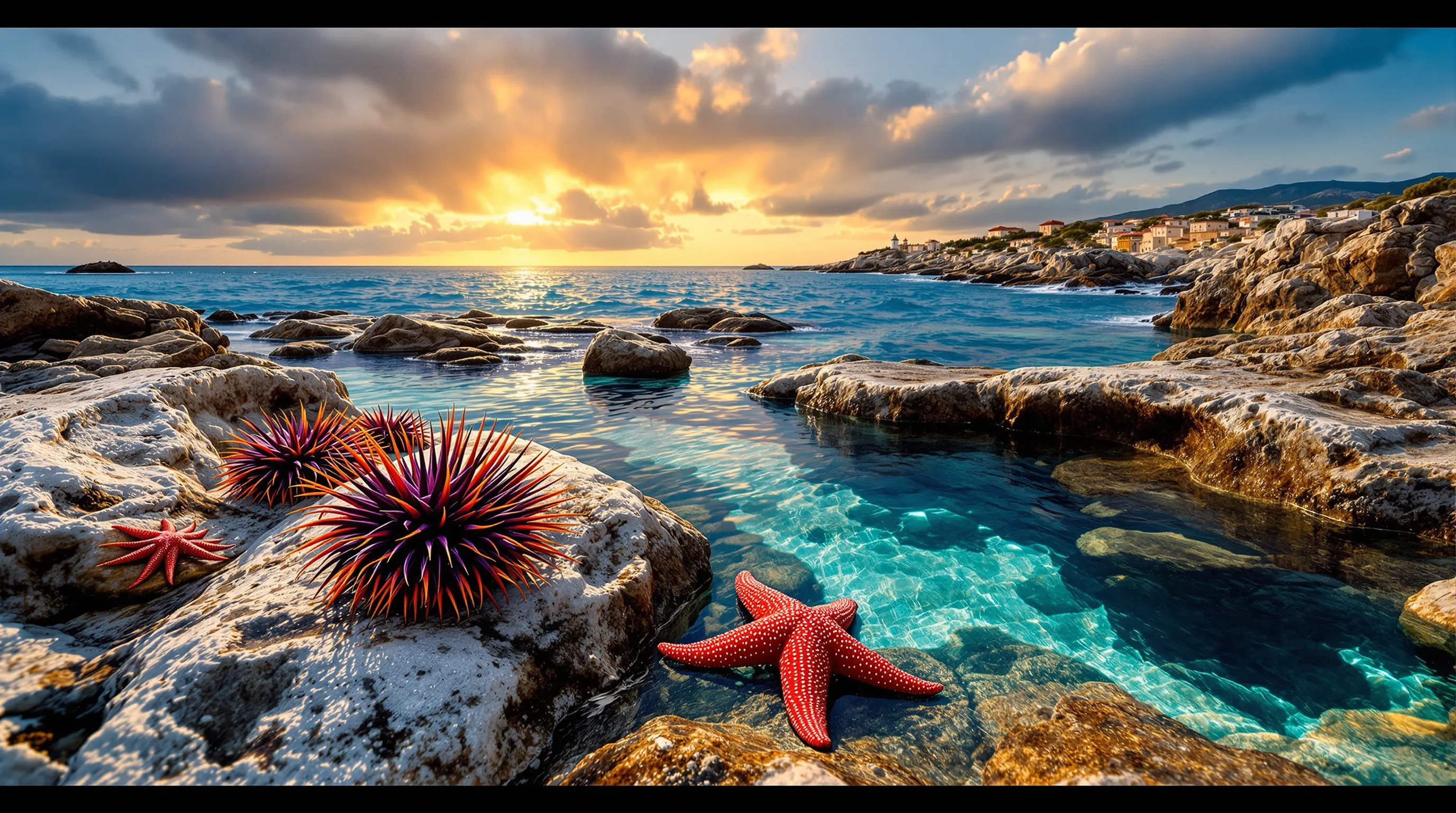
Mediterranean starfish and sea urchins serve as true sentinels of coastal marine ecosystems. These echinoderms, present for over 500 million years, play a crucial role in the biological balance of our waters. The Mediterranean hosts 47 species of starfish and 18 species of sea urchins, each adapted to specific conditions. Their presence or absence reveals the health of our coastlines, influenced by climate change, pollution and tourism pressure. Observing these fascinating creatures offers a unique window into Mediterranean marine biodiversity.
Iconic Species to Discover
The purple sea urchin Paracentrotus lividus dominates rocky coastal zones, creating veritable underwater gardens. This endemic species can live up to 50 years and excavates cavities in limestone rock. The red starfish Echinaster sepositus, recognisable by its vermillion colour, prefers sandy bottoms between 5 and 200 metres depth. The long-spined sea urchin Centrostephanus longispinus, with spectacular black spines, colonises caves and rocky overhangs. These indicator species reveal water quality: their density decreases in polluted or overheated areas. Purple sea urchin populations have thus dropped by 30% over 20 years on certain French coastlines, demonstrating environmental pressures.
Remarkable Adaptations to Mediterranean Conditions
These echinoderms develop unique strategies facing Mediterranean constraints. The purple sea urchin resists temperature variations thanks to heat shock proteins. Starfish regenerate lost arms, a crucial ability in environments buffeted by storms. Some species modify their reproductive behaviour according to water temperature, gradually adapting to current climate warming.
Their Fundamental Ecological Role
Mediterranean sea urchins regulate algae growth, maintaining the balance of Posidonia seagrass beds. A single purple sea urchin consumes up to 40g of algae daily, preventing coastal water eutrophication. Starfish control populations of molluscs and crustaceans, acting as regulatory predators. Their disappearance triggers ecological cascades: without sea urchins, algae proliferate and smother corals and Posidonia. Scientists observe this phenomenon on 15% of Mediterranean coastlines where overfishing has eliminated their natural predators. This function as 'marine gardeners' becomes crucial facing increased nutrients in water, linked to urban and agricultural discharge affecting 80% of the Mediterranean littoral.
Indicators of Environmental Change
Observing these species reveals major transformations in Mediterranean ecosystems. Starfish migrate towards deeper, cooler waters, their distribution shifting 2 to 5 metres deeper per decade. Sea urchins modify their reproductive cycles: traditionally active in spring, they now also reproduce in autumn when temperatures remain elevated. Mass mortalities, such as that of 2022 which affected 90% of sea urchins in certain French zones, alert us to water quality degradation. These events, correlated with marine heatwave peaks, have multiplied since 2010. Researchers use these organisms as 'biological thermometers' to measure climate warming's impact on Mediterranean marine biodiversity.
Scientific Monitoring and Survey Programmes
The TEMPO network monitors 50 Mediterranean sites since 2010, documenting echinoderm population evolution. Citizen divers participate in the BioObs programme, recording these species via a mobile app. This data feeds climate models and guides marine conservation policies. Results show species migration northwards of 50km per decade.
Practical Tips for Observing Them
Responsible observation requires suitable equipment and strict rule adherence. Favour snorkelling between May and October, when visibility reaches 15 to 25 metres. The best observation zones include marine protected areas like Port-Cros (£4 entry fee) or the Calanques (free access). Avoid touching these fragile animals: sea urchins lose their spines under stress, weakening their defences. Use short fins to avoid damaging the seabed. Local guides offer trips from £30 per person, including equipment and ecological briefing. Respect breeding zones between March and June, when observation should be limited to distance. Participate in citizen science by photographing your observations to transmit to researchers via dedicated applications.
Frequently asked questions
Can you touch starfish and sea urchins in the Mediterranean?
No, it's strongly discouraged to touch them. These animals are fragile and human contact disturbs their physiological balance. Sea urchins can lose their spines under stress, compromising their survival. Observing from distance respects their wellbeing and preserves the Mediterranean marine ecosystem.
Where can you easily observe these echinoderms on the French Mediterranean coast?
Marine protected areas offer the best opportunities: Port-Cros, Scandola, the Marseille Calanques. Rocky shallow zones between 2 and 10 metres concentrate most species. Avoid sandy beaches where they're rare, favour rocky headlands and points.
How do you recognise a healthy Mediterranean starfish from a sick sea urchin?
A healthy starfish displays symmetrical arms and vivid colour. A sick sea urchin loses its spines, presents white or black spots on its shell. If observing suspicious animals, report to local marine authorities for population health monitoring.
Mediterranean starfish and sea urchins offer us a fascinating lesson on marine ecosystem interconnection. Their observation reveals our coastlines' health and raises awareness of current environmental challenges. To discover other Mediterranean wildlife marvels and organise your responsible observation trips, explore our detailed guides on dauphin-mediterranee.com. Each dive becomes an act of discovery and preservation of this exceptional natural heritage.
Read also
7 Sea Activities in Marseille That Locals Have Kept Secret for Years
Discover Marseille's authentic nautical activities that only locals know about. ...
What Pilot Whales Reveal About the Secrets of the Mediterranean
Discover Mediterranean pilot whales: habitats, behaviours and best observation s...
5 secrets to swimming with wild dolphins in the Mediterranean revealed
Discover how to encounter dolphins in the Mediterranean: permitted zones, regula...
What marine biologists reveal about the mysterious Risso's dolphin
Discover the secrets of Risso's dolphins in the Mediterranean: behaviour, habita...