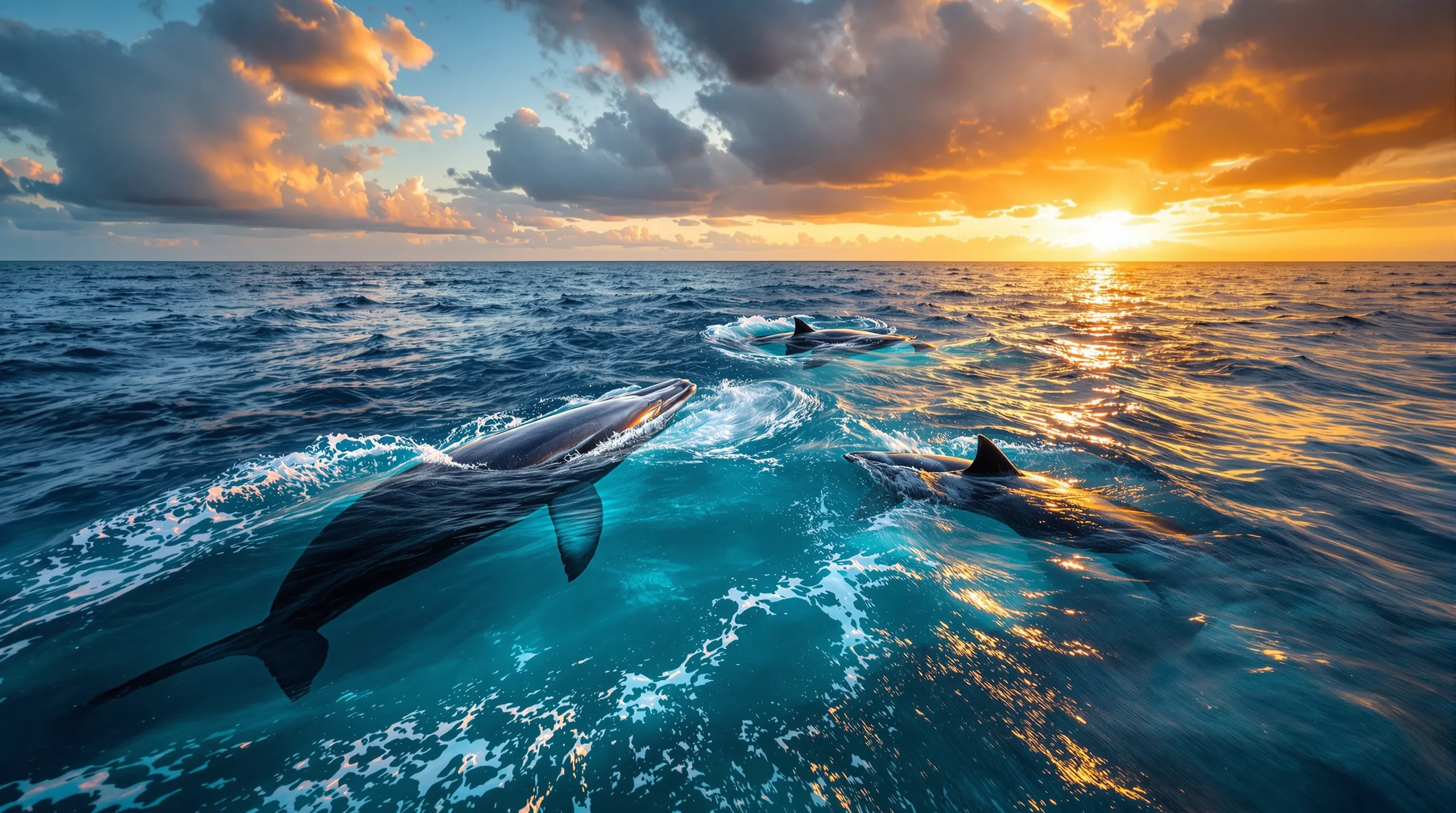
These Ocean Giants Will Transform Your Mediterranean Experience
The Mediterranean is home to a resident population of 2,500 sperm whales, these deep-sea giants that can reach up to 20 metres in length and weigh 57 tonnes. Contrary to popular belief, this semi-enclosed sea forms one of Europe's most important sanctuaries for these extraordinary marine mammals. Between the French Riviera, Liguria and Sardinia, the Pelagos Sanctuary protects 87,500 km² of essential habitat where these legendary predators hunt giant squid and fish in abyssal depths exceeding 2,000 metres.
The Pelagos Sanctuary: Kingdom of Mediterranean Sperm Whales
Established in 1999, the Pelagos Sanctuary spans three countries and constitutes the world's first international marine protected area in the high seas. This triangular zone between Toulon, Genoa and northern Sardinia contains 30% of Mediterranean marine biodiversity. Sperm whales find ideal conditions here thanks to currents that bring nutrients up from the abyss, creating an exceptionally rich food chain. Females and their calves reside here year-round, whilst adult males migrate to the Atlantic for breeding. This unique sedentary population has been the subject of in-depth scientific studies for over 30 years.
Unique Abyssal Depths in the Mediterranean
The submarine canyon off Monaco reaches 2,700 metres deep, creating an abyssal ecosystem just 10 kilometres from the coast. These depths harbour giant squid, the sperm whales' favourite prey, in exceptional proportions for a semi-enclosed sea. The proximity of these depths to the coastline greatly facilitates observation of these marine giants from the surface.
Fascinating Behaviours of Mediterranean Sperm Whales
Mediterranean sperm whales dive to depths of 1,500 metres to hunt, holding their breath for an average of 45 minutes. Their echolocation clicks, audible from 10 kilometres away, allow them to locate prey in the total darkness of the abyss. At the surface, they exhibit complex social behaviours: females form family groups of 12 to 20 individuals, sharing calf care and hunting techniques. Observations reveal distinct regional dialects, with each family clan possessing its own repertoire of acoustic codas for communication. This matriarchal social organisation lasts a lifetime, with males leaving the group around age 12.
Best Sperm Whale Watching Locations
Departing from Monaco, excursions reach whale areas in just 45 minutes, with an 85% success rate between May and October. From Sanary-sur-Mer and Toulon, trips navigate towards submarine canyons where sperm whales regularly surface. The Hyères Islands also offer excellent observation points, particularly off Port-Cros. In Italy, Imperia and San Remo serve as ideal bases for exploring the Ligurian section of the sanctuary. The Mediterranean advantage lies in the proximity of observation zones: unlike the Atlantic where one must sail for hours, here sperm whales inhabit waters within 20 kilometres of the French coast.
Individual Recognition and Scientific Monitoring
Each sperm whale possesses a unique tail fluke, serving as an identity card allowing researchers to track over 500 individuals since 1990. This exceptional database reveals family connections, migration routes and fascinating individual behaviours, enriching each tourist observation with valuable scientific dimension.
Practical Tips for Sperm Whale Watching
The optimal season runs from May to October, with a preference for June-September when seas are calm and observation conditions excellent. Expect £55-70 per adult for a 6-hour trip departing from French ports, £35-55 from Italy. Book 48 hours in advance during peak season. Bring sun cream, hat, windproof jacket and seasickness medication. Trips typically begin at 8am to take advantage of the best morning conditions. Choose operators with High Quality Whale Watching certification, respecting the regulatory 100-metre distance. Glass-bottom boats or rigid inflatables offer the finest observation experiences, allowing silent approaches to these giants.
Frequently asked questions
When is the best time to see sperm whales in the Mediterranean?
The prime period runs from May to October, with peak activity during summer. Sperm whales are present year-round in the Pelagos Sanctuary, but summer weather conditions greatly facilitate surface observation, with success rates reaching 85% on organised trips.
Where should I depart from to see sperm whales in the French Mediterranean?
Monaco, Sanary-sur-Mer, Toulon and the Hyères Islands are the best departure points. Monaco offers the quickest access to observation zones (45 minutes), whilst Sanary provides excellent value for money. All these ports organise regular trips to the Pelagos Sanctuary between May and October.
How much does a Mediterranean sperm whale watching trip cost?
Expect £55-70 per adult from French ports for a 6-hour excursion, often including refreshments and a naturalist guide. Italian prices are slightly lower (£35-55). Children typically receive a 30% discount. Advance booking recommended 48 hours ahead during peak season to guarantee your place.
Sperm whale watching in the Mediterranean offers a world-unique experience, combining geographical proximity with exceptional scientific richness. These abyssal giants, true ambassadors of marine biodiversity, transform every sea trip into an unforgettable adventure. To discover other cetacean wonders of the Mediterranean and plan your next observations, explore dauphin-mediterranee.com and dive into the fascinating world of marine mammals.
Read also
What Locals Keep Secret About Antibes' Hidden Watersports
Discover Antibes' lesser-known nautical activities on its stunning peninsula. Se...

What Marseille Calanques diving guides are hiding about underwater treasures
Discover the secret diving spots in Marseille Calanques that only local guides k...
These 12 Secret Mediterranean Ports That Even Locals Don't Know About
Discover 12 hidden picturesque ports along the Mediterranean coast, far from tou...
This 4-Metre Giant Dolphin Will Transform Your View of the Mediterranean
Discover Risso's dolphin, the Mediterranean's overlooked 4m giant. Where to spot...