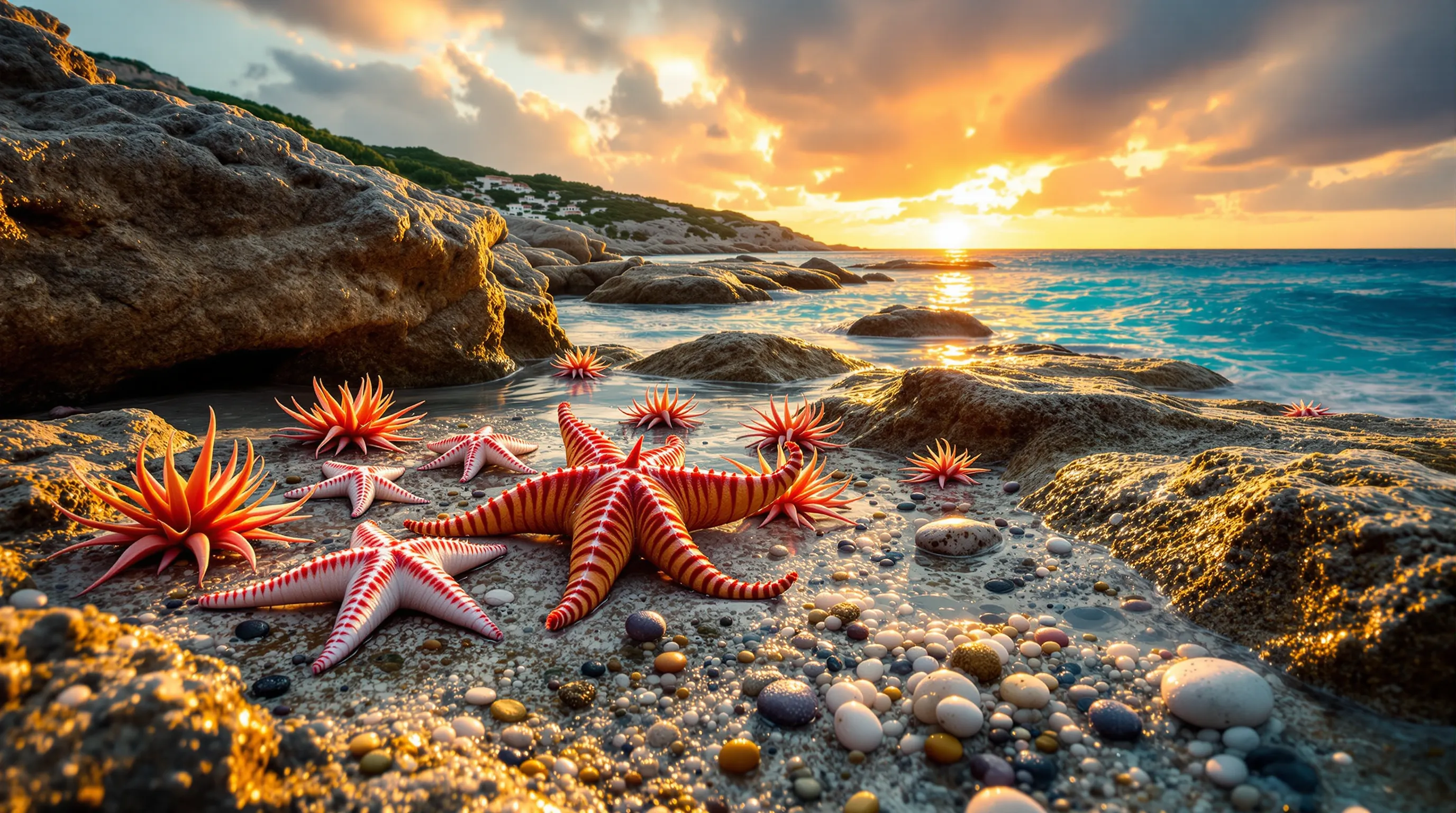
What Marine Biologists Reveal About Mediterranean Starfish
The Mediterranean Sea hosts over 40 species of echinoderms, those fascinating creatures known as starfish and sea urchins. From the crystal-clear waters off the French Riviera to the rocky depths of the Balearics, these marine animals play a crucial ecological role often overlooked by visitors. The common starfish can regenerate a lost arm in 6 months, whilst the Mediterranean purple sea urchin lives up to 200 years. These surprising facts reveal the extraordinary biological diversity of our Mediterranean coastlines, accessible to divers and snorkellers curious about nature.
Iconic Mediterranean starfish species
Astropecten aranciacus, recognisable by its bright orange colour, dominates sandy seabeds between 5 and 30 metres depth. This species reaches 20cm across and feeds primarily on bivalve molluscs which it swallows whole. The red starfish (Echinaster sepositus) prefers Posidonia seagrass beds and rocky areas. Smaller at 12cm maximum, it displays a brilliant red colour making it easily spotted. Coscinasterias tenuispina, an endemic Mediterranean species, typically possesses 7 arms instead of the usual 5. These starfish act as regulatory predators, maintaining the balance of mollusc and marine worm populations on coastal seabeds.
Optimal observation periods
May through October offers the finest observation conditions with excellent underwater visibility. Starfish are most active during nighttime hours but remain visible during daytime in shaded rock crevices. The breeding period from April to June reveals particular behaviours, notably Astropecten gatherings on sandy bottoms.
Mediterranean sea urchins: remarkable diversity and adaptations
The purple sea urchin (Paracentrotus lividus) massively colonises rocky littoral zones, creating genuine excavations in limestone rock. Its characteristic purple spines measure 2-3cm and regenerate continuously. The diadem urchin (Centrostephanus longispinus) impresses with its black spines reaching up to 15cm in length. This nocturnal species hides in crevices during daylight hours. The edible sea urchin (Echinus melo) displays a distinctive pinkish colour and inhabits sandy bottoms between 20 and 100 metres. Each species possesses a unique locomotion system based on hundreds of hydraulic tube feet, allowing precise movement across any type of marine substrate.
Ecological role and impact on Mediterranean ecosystems
Starfish naturally regulate bivalve populations, preventing overpopulation of mussels and clams on the seabed. A single Astropecten consumes up to 6 molluscs per day. Sea urchins, true gardeners of the depths, graze algae and maintain plant diversity. Purple urchins can consume 15% of their body weight daily in algae. This preventive action avoids eutrophication of coastal zones. However, overpopulation of purple urchins, linked to the decline of their natural predators like sea breams and gilt-head breams, creates bare substrate areas called 'urchin barrens'. This phenomenon affects Posidonia seagrass regeneration, crucial habitat for numerous Mediterranean species.
Environmental quality indicators
Diverse echinoderm presence signals exceptional water quality. Areas presenting 4-5 different species of urchins and starfish indicate a healthy, balanced ecosystem. Conversely, exclusive dominance by purple urchins reveals ecological imbalance requiring particular attention from marine protected area managers.
Practical tips for responsible observation
Essential kit includes mask, snorkel and fins to explore zones from 0.5 to 3 metres depth where most species live. Prime observation locations include Port-Cros marine reserves (£12 entry), Scandola in Corsica and the Medes Islands in Catalonia. The May-September period guarantees optimal visibility of 15-25 metres. Maintain a minimum distance of 50cm and avoid direct contact. Local diving centres offer specialist echinoderm guided trips from £38. Photograph without flash to preserve their natural behaviour. Some species like the diadem urchin possess venomous spines requiring protective neoprene booties.
Frequently asked questions
Can you touch starfish whilst snorkelling?
It's strongly advised not to touch starfish. Their skin secretes toxic substances and human contact disturbs their delicate sensory system. Observe them from a minimum distance of 50cm to respect their natural behaviour and avoid any stress.
Which sea urchins are dangerous in the Mediterranean?
The diadem urchin (long black spines) and purple urchin can cause painful injuries. Always wear protective booties. If stung, carefully remove visible spines and consult a local chemist for appropriate antiseptic treatment.
Where can you easily observe Mediterranean starfish without diving?
Shallow rocky areas along the French Riviera, particularly around Antibes and the Lérins Islands, offer excellent snorkelling observation opportunities. The natural pools of Bonifacio in Corsica also reveal splendid echinoderm diversity accessible with mask, snorkel and fins.
Mediterranean starfish and sea urchins reveal unsuspected biological richness, privileged witnesses to our marine ecosystems' health. Their responsible observation considerably enriches any Mediterranean coastal getaway. Discover other marine wildlife wonders on dauphin-mediterranee.com to plan your next underwater explorations in the Mediterranean.
Read also
7 secrets about fin whales that will transform your view of the oceans
Discover the secrets of fin whales in the Mediterranean, the second largest anim...
7 Secrets Hidden in the Mediterranean's Most Picturesque Harbours
Discover the most authentic Mediterranean harbours and their untold stories. Com...
These 7 dolphin behaviours will amaze you on your trip out
Discover where and when to watch dolphins in the Mediterranean. Complete guide w...
5 fascinating secrets about common dolphins revealed by scientists
Discover 5 extraordinary secrets of Mediterranean common dolphins revealed by th...