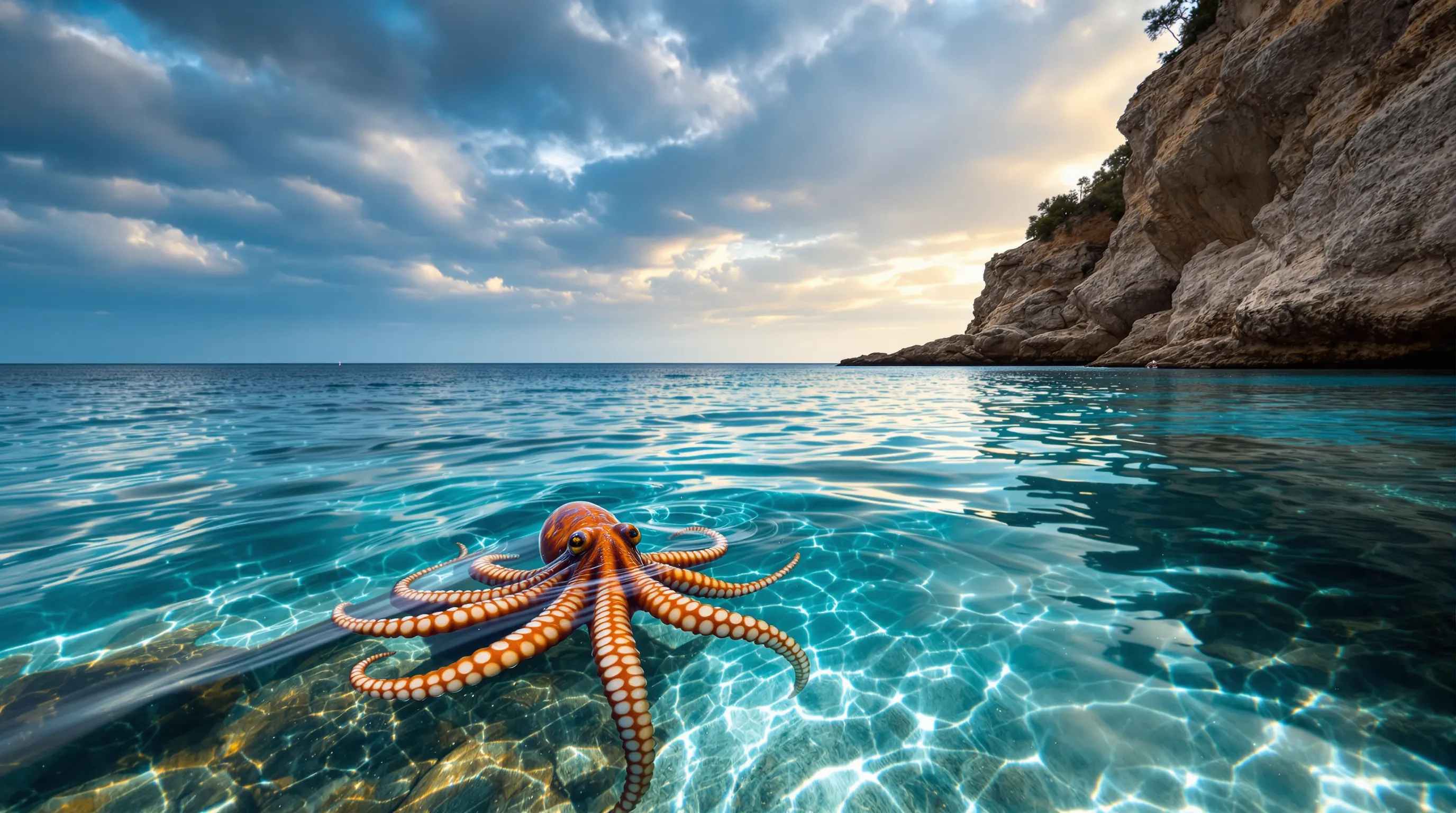
7 Fascinating Things You Never Knew About Mediterranean Octopuses
Mediterranean waters harbour over 15 species of octopus, extraordinary creatures that fascinate marine biologists and divers alike. The common octopus (Octopus vulgaris) can change colour in 0.3 seconds and possesses 500 million neurons—more than a dog. These intelligent cephalopods inhabit our coastlines from March to October, the optimal period for observation. Their complex behaviours and remarkable adaptation to Mediterranean rocky seabeds make them prime subjects of study, accessible to snorkelling enthusiasts in depths of 2 to 30 metres along the shoreline.
Remarkable Intelligence of Mediterranean Octopuses
Mediterranean octopuses demonstrate exceptional cognitive abilities documented by the Oceanographic Institute of Monaco. These molluscs solve complex mazes in under 5 minutes and memorise their routes for up to 24 hours. Their distributed brain system in each tentacle allows them to process 8 streams of information simultaneously. Mediterranean observations reveal they use tools, stacking stones and shells to construct shelters. This intelligence also manifests through their mimicry abilities: they reproduce textures and colours of 40 different species for camouflage. Marine biologists have recorded 15 distinct hunting techniques depending on prey and coastal environment.
Instant Camouflage Techniques
Mediterranean octopus chromatophores contain up to 200 different pigments, controlled by 10 million muscle cells. This biological technology allows them to instantly reproduce the appearance of coral, algae, or Mediterranean sand. Divers regularly observe this spectacular metamorphosis near Posidonia seagrass beds, where octopuses become virtually invisible by adapting their rough texture to coastal limestone rocks.
Preferred Habitats Along Mediterranean Coasts
Mediterranean octopuses preferentially colonise rocky seabeds between 5 and 50 metres depth, particularly abundant along the French Riviera and in Corsica. Their dens, excavated in limestone crevices, typically measure 30 to 40 cm in diameter with 2 to 3 escape routes. Optimal temperatures of 18-24°C from May to September favour their activity. Posidonia seagrass beds constitute their main hunting grounds, rich in crustaceans and molluscs. The densest populations concentrate around the Hyères Islands, Cape Corsica, and the Marseille calanques, averaging 3 to 5 individuals per hectare of rocky seabed. These ecosystems provide the dietary diversity necessary for their development.
Life Cycle and Reproduction in the Mediterranean
The reproductive cycle of Mediterranean octopuses spans April to August, when females lay up to 150,000 eggs in protected rocky cavities. Incubation lasts 45 to 60 days depending on water temperature, with females fasting entirely during this brooding period. Juveniles measure 3-4mm at hatching and drift in open water for 2-3 weeks before joining coastal seabeds. Their rapid growth enables them to reach 15-20cm within 6 months. Maximum longevity of 18 months in the Mediterranean directly influences tourist observation strategies. Males, recognisable by their modified hectocotylus, die after mating, creating notable seasonal variations in observable populations.
Optimal Observation Period
May to September offer the best conditions for observing Mediterranean octopuses. Underwater visibility reaches 20-30 metres, with water temperatures of 22-26°C favouring their diurnal activity. Morning excursions between 8am and 11am reveal their hunting behaviours, particularly spectacular near rocky drop-offs and coastal wrecks where they seek crustaceans and small fish.
Practical Tips for Coastal Observation
Observing Mediterranean octopuses requires basic snorkelling equipment (mask, snorkel, fins) and a 3mm wetsuit for morning outings. Average budget: £70-100 for complete kit. Top spots include Corsica's Scandola Nature Reserve (boat access £40), Cassis calanques (£5/day parking), and Cerbère-Banyuls Reserve (free access). Avoid peak tourist hours (12pm-4pm), preferring outings at 8am-10am or 5pm-7pm instead. Maintain a minimum distance of 2 metres to avoid disturbing their natural behaviour. The May-September period guarantees optimal visibility with water temperatures of 20-26°C. Book guided trips 48 hours in advance during high season.
Frequently asked questions
Where can I easily observe octopuses in the Mediterranean?
Best spots are the Marseille calanques, Cerbère-Banyuls Reserve, and Corsican coastline. Optimal depth 5-15 metres, May-September period, morning outings recommended. Snorkelling equipment sufficient, 2-metre distance respect mandatory. Excellent visibility, water temperature 20-26°C.
Are Mediterranean octopuses dangerous for swimmers?
Absolutely not dangerous. Mediterranean octopuses naturally flee from humans. No recorded cases of aggression. Maximum size 60cm, timid behaviour. Respect their space, don't attempt to touch them. Their bite, very rare, isn't venomous unlike tropical species.
What's the best season for diving with octopuses in the Mediterranean?
May to September offers optimal conditions. Water temperature 20-26°C, visibility 20-30 metres, maximum diurnal octopus activity. April-August breeding period particularly interesting. Avoid October-March: cold water 14-16°C, less active octopuses, reduced visibility. Booking guided trips advisable in high season.
Mediterranean octopuses reveal fascinating behavioural treasures to patient observers. Their exceptional intelligence and camouflage techniques offer unique natural spectacles along our coastlines. To deepen your knowledge of Mediterranean marine life and discover other remarkable species, visit dauphin-mediterranee.com and plan your next underwater exploration.
Read also
What Mediterranean fishermen are doing to save their fish
Discover sustainable fishing techniques practised in the Mediterranean by profes...
What Divers Are Hiding About the 10 Best Mediterranean Snorkelling Spots
Discover the 10 finest Mediterranean snorkelling spots revealed by experts. Comp...
What Captains Reveal About the French Riviera's Secret Cruises
Discover the confidential French Riviera cruises that only local captains know. ...
What Locals Do to Explore Marseille by Sea: 12 Secrets Revealed
Discover Marseille's secret maritime activities that only locals know about. Com...