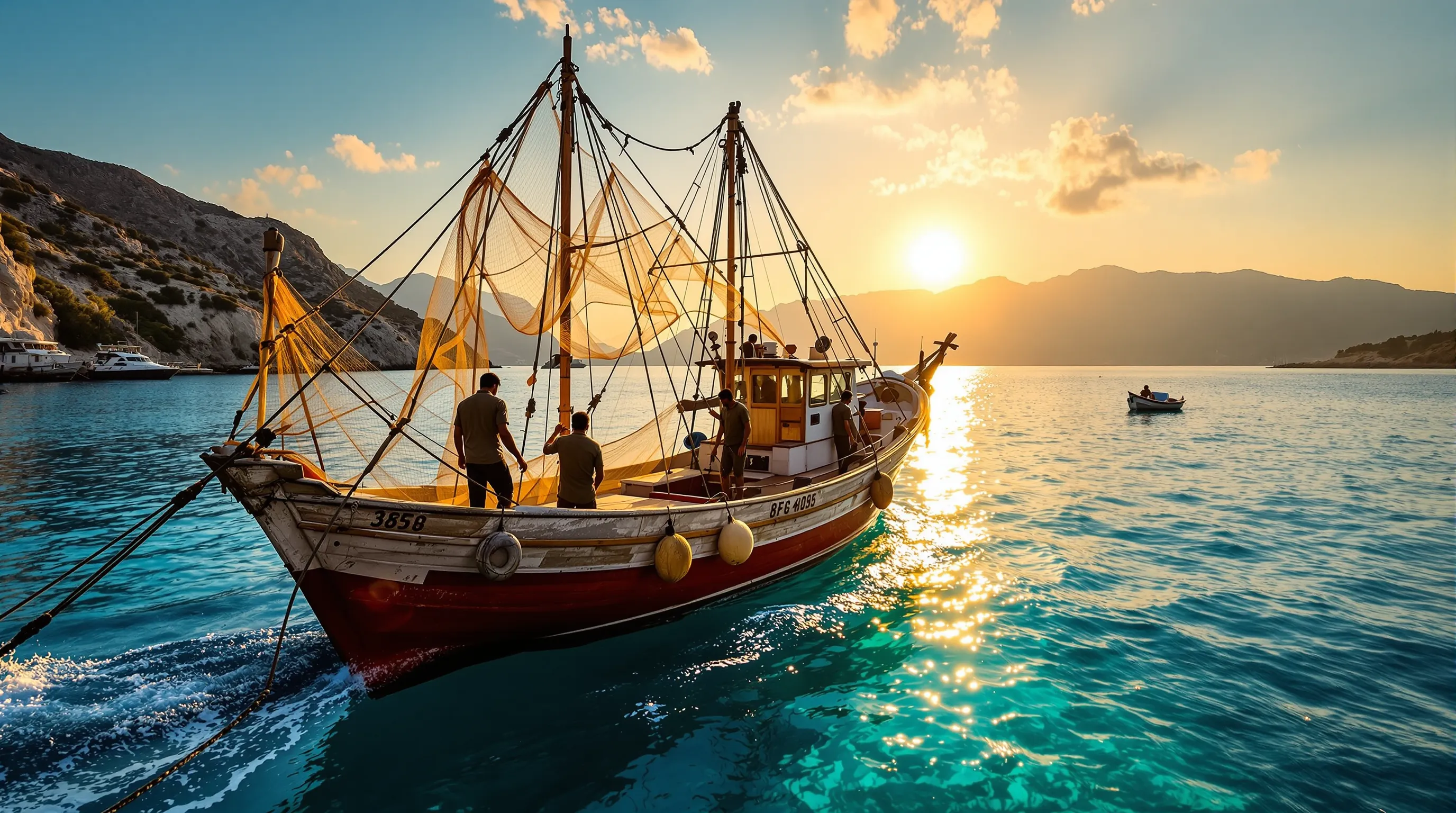
What Mediterranean fishermen are doing to save their fish
The Mediterranean is home to 17,000 marine species in just 1% of the world's oceans. Yet, 90% of fish stocks there are overexploited according to the European Union. Facing this urgent situation, professional and amateur fishermen are adopting revolutionary practices. From the French Riviera to the Greek islands, a new generation is transforming their ancestral methods. These innovations preserve biodiversity whilst maintaining economically viable fishing for local communities.
Selective fishing techniques revolutionising the Mediterranean
Intelligent nets now equip 40% of the French Mediterranean fleet. These devices incorporate specific mesh sizes that allow juveniles and protected species to escape. In Catalonia, fishermen use circle hooks which reduce accidental catches of marine turtles by 65%. Surface longlining is gradually replacing destructive bottom trawling. This method preserves Posidonia seagrass beds, the true lungs of the sea. Self-imposed quotas by local cooperatives maintain bluefin tuna populations in constant growth since 2010.
Technological innovation in service of the ocean
Next-generation sonar detects the size of schools before capture. Onboard GPS automatically avoids sensitive breeding zones. These tools reduce fishing time by 30% whilst doubling catch selectivity according to the Mediterranean Institute of Oceanography.
Fishing calendars: respecting natural marine cycles
Summer closures protect 85% of species during breeding periods. From June to August, grouper, sea bream and sea bass reproduce in coastal seagrass beds. Professional fishermen adapt their trips to lunar phases, the optimal period for certain species. This millennial practice, scientifically validated, increases yields by 25% whilst preserving stocks. Marine protected areas now cover 9.7% of the French Mediterranean. These sanctuaries serve as natural nurseries, feeding adjacent fishing zones through a proven spillover effect.
Emblematic species: participatory conservation success
Mediterranean bluefin tuna now counts 70% more population than in 2010 thanks to strict quotas. Fishermen voluntarily report bottlenose dolphin sightings to scientists via a mobile application. This collaboration has identified 12 new migratory corridors. The dusky grouper is repopulating French coasts after 30 years of near-disappearance. Minimum catch sizes, respected at 98% according to controls, guarantee reproduction before harvesting. This collaborative management brings together fishermen, scientists and marine area managers.
The spectacular return of grouper in the Mediterranean
Banned from fishing since 1993, the dusky grouper is recolonising rocky coasts. Its population has increased fifteen-fold in the Port-Cros and Scandola reserves. Divers report frequent encounters, a sign of an ecosystem regenerating effectively.
Practical tips for responsible leisure fishing
Respect minimum sizes: 25cm for sea bass, 20cm for sea bream. A measuring gauge costs £4 and avoids fines up to £650. Prefer shore fishing at tides with coefficients above 90, more respectful than amateur trawling. Fish early morning or late evening when fish are naturally active. Limit your catch to actual family needs. A leisure fishing permit costs £30 per year and directly funds restocking programmes. Avoid breeding periods from April to July for main coastal species.
Frequently asked questions
Which fishing techniques are banned in the Mediterranean?
Bottom trawling at less than 50m depth is prohibited. Fishing with explosives, poison or electricity is strictly forbidden. Drift nets longer than 2.5km are also banned to protect marine mammals.
How to recognise a fish of legal size?
Use a graduated ruler measuring from the tip of the snout to the end of the tail. Minimum sizes vary: 25cm for sea bass, 20cm for sea bream, 15cm for gilthead bream. When in doubt, release the fish immediately.
Where to practice responsible fishing on the French Mediterranean coast?
Authorised zones extend beyond 300m from the shore or in more than 3m depth. Avoid integral marine reserves like Port-Cros. Check local regulations as some communes impose additional seasonal restrictions.
Responsible fishing is sustainably transforming the Mediterranean. These innovative practices reconcile tradition and preservation, offering future generations a preserved marine heritage. Discover this authentic Mediterranean during your coastal getaways. To plan your responsible stay and observe this marine renaissance, visit dauphin-mediterranee.com and participate in this blue revolution.
Read also
What Divers Are Hiding About the 10 Best Mediterranean Snorkelling Spots
Discover the 10 finest Mediterranean snorkelling spots revealed by experts. Comp...
What Captains Reveal About the French Riviera's Secret Cruises
Discover the confidential French Riviera cruises that only local captains know. ...
What Locals Do to Explore Marseille by Sea: 12 Secrets Revealed
Discover Marseille's secret maritime activities that only locals know about. Com...
What Divers Keep Secret About Villefranche-sur-Mer's Nautical Treasures
Discover the secrets of water activities in Villefranche-sur-Mer: diving, kayaki...