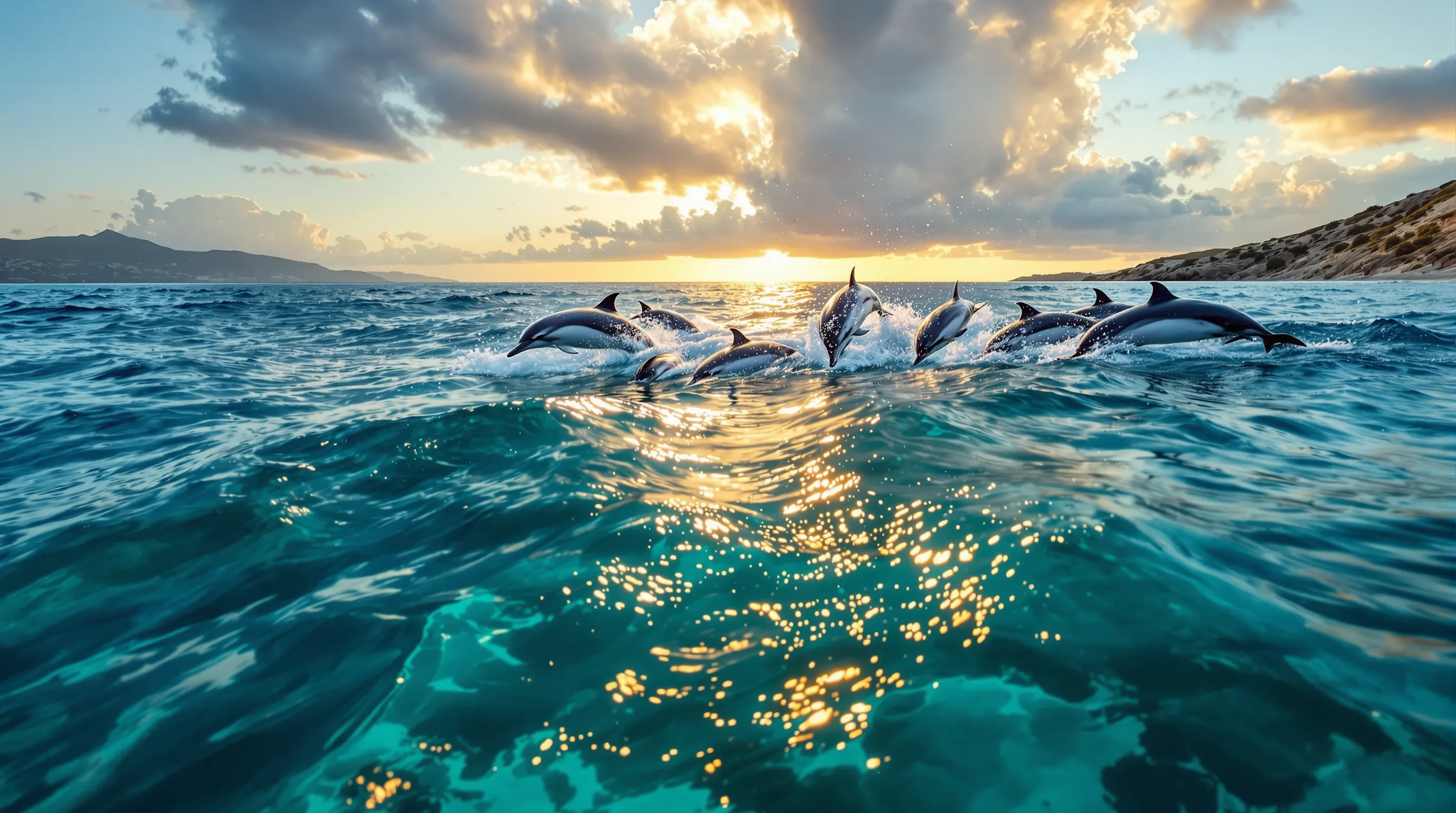
What Marine Biologists Reveal About Mediterranean Cetacean Migrations
The Western Mediterranean is home to the Pelagos Sanctuary, a protected zone covering 87,500 km² where 8 species of resident cetaceans thrive. Marine biologists have identified optimal viewing periods based on migration patterns and feeding behaviours. Between May and September, 85% of boat trips offer guaranteed encounters with striped dolphins, sperm whales, or fin whales. This exceptional biodiversity results from the convergence of marine currents creating a unique ecosystem, concentrating the krill and fish that sustain these majestic marine mammals.
Seasonal Calendar of Cetacean Species
Mediterranean spring (April-June) marks the arrival of fin whales, the world's second-largest whale, migrating north from North Africa to their summer feeding grounds. Striped dolphins, permanent residents, show peak activity between May and August with pods of 20 to 200 individuals. Sperm whales, present year-round, offer the finest sightings from June to September in the deep waters of Monaco's submarine canyon. Pilot whales favour the summer months, whilst Risso's dolphins appear sporadically from April to October. This seasonality follows the movements of plankton and fish shoals, influenced by water temperature and marine currents.
Breeding Season and Behaviours
Summer corresponds to the breeding season for most species. Dolphins then display spectacular behaviours with leaps, acrobatics, and more frequent social play. Pregnant females seek the calm waters of sheltered bays for calving, offering privileged sightings near the coast between June and August.
Prime Geographic Zones According to Seasons
The golden triangle for observation extends between Nice, Monaco, and the island of Porquerolles, where the proximity of the continental shelf and abyssal depths creates ideal conditions. In spring, the Provençal coast between Marseille and Menton concentrates 70% of fin whale sightings. Summer sees dispersion towards the Côte d'Azur and Italian Riviera, with hotspots around Sanremo and Imperia. Western Corsican waters become particularly productive from August to October. The Roya submarine canyon zone, accessible from Monaco, remains the top spot for sperm whales with 90% success rates in July-August. These geographic variations follow cold-water upwellings rich in nutrients and surface currents.
Weather Conditions and Environmental Factors
Optimal conditions combine calm seas (swells under 1 metre), light winds (less than 15 knots), and visibility exceeding 5 kilometres. The Mistral, though creating rough seas, generates nutrient-rich deep-water upwellings that attract cetaceans 24 to 48 hours after its passage. High-pressure days from May to September offer 85% favourable conditions compared to 45% in winter. Water temperature, ranging between 18°C and 25°C in summer, directly influences plankton distribution. New moon phases favour nocturnal cetacean activity, as they surface to feed on squid and small fish. Professionals recommend morning trips between 7am and 11am, the period of maximum meteorological calm.
Impact of Marine Currents on Sightings
The Liguro-Provençal current, flowing west along the French coast, carries plankton and nutrients. Its speed, maximum in summer (0.5 m/s), creates convergence zones where prey and predators concentrate, tripling observation chances between June and August.
Practical Tips for Optimising Your Trips
Book your whale watching trips 2 to 3 weeks in advance for high season (July-August), when prices range from £35 to £65 per adult depending on duration (3 to 8 hours). Morning departures at 8am offer calm seas and ideal light for photography. Choose operators certified by High Quality Whale Watching, guaranteeing respectful approaches at minimum 100-metre distances. Bring high-protection sun cream, a cap, polarised sunglasses, and a windbreaker even in summer. 8x32 binoculars significantly enhance the viewing experience. Pack seasickness medication if prone, even in calm conditions. May-June and September trips offer excellent value with 30% discounts on summer rates and often ideal weather conditions.
Frequently asked questions
What's the best time to see fin whales in the Mediterranean?
Fin whales can be observed from April to October, with optimal peak between June and August. During this period, they're present in numbers within the Pelagos Sanctuary to feed on krill and small pelagic fish, offering 80% observation chances during whale watching trips.
Can cetaceans be observed year-round in the Mediterranean?
Yes, several species are permanent residents including striped dolphins, Risso's dolphins, and sperm whales. However, the May-September period remains optimal with favourable weather conditions and maximum animal activity. Winter limits sea trips due to challenging weather conditions.
From which ports can you depart to observe cetaceans in the French Mediterranean?
Main departure ports include Nice, Cannes, Antibes, Monaco, Sanary-sur-Mer, and Port-Cros. Nice and Monaco offer the quickest access to the Pelagos Sanctuary (30-45 minutes' sailing). Marseille and Cassis also enable trips to coastal observation zones with dolphins and occasionally fin whales.
Mediterranean cetacean watching reveals its secrets to patient and well-informed visitors. The May-September period remains essential for maximising your chances of magical encounters with these ocean giants. Whether you choose the azure waters of the Riviera or Corsica, each trip promises unique emotions. To deepen your knowledge and discover the finest observation spots, consult the expert resources at dauphin-mediterranee.com and prepare your next marine adventure.