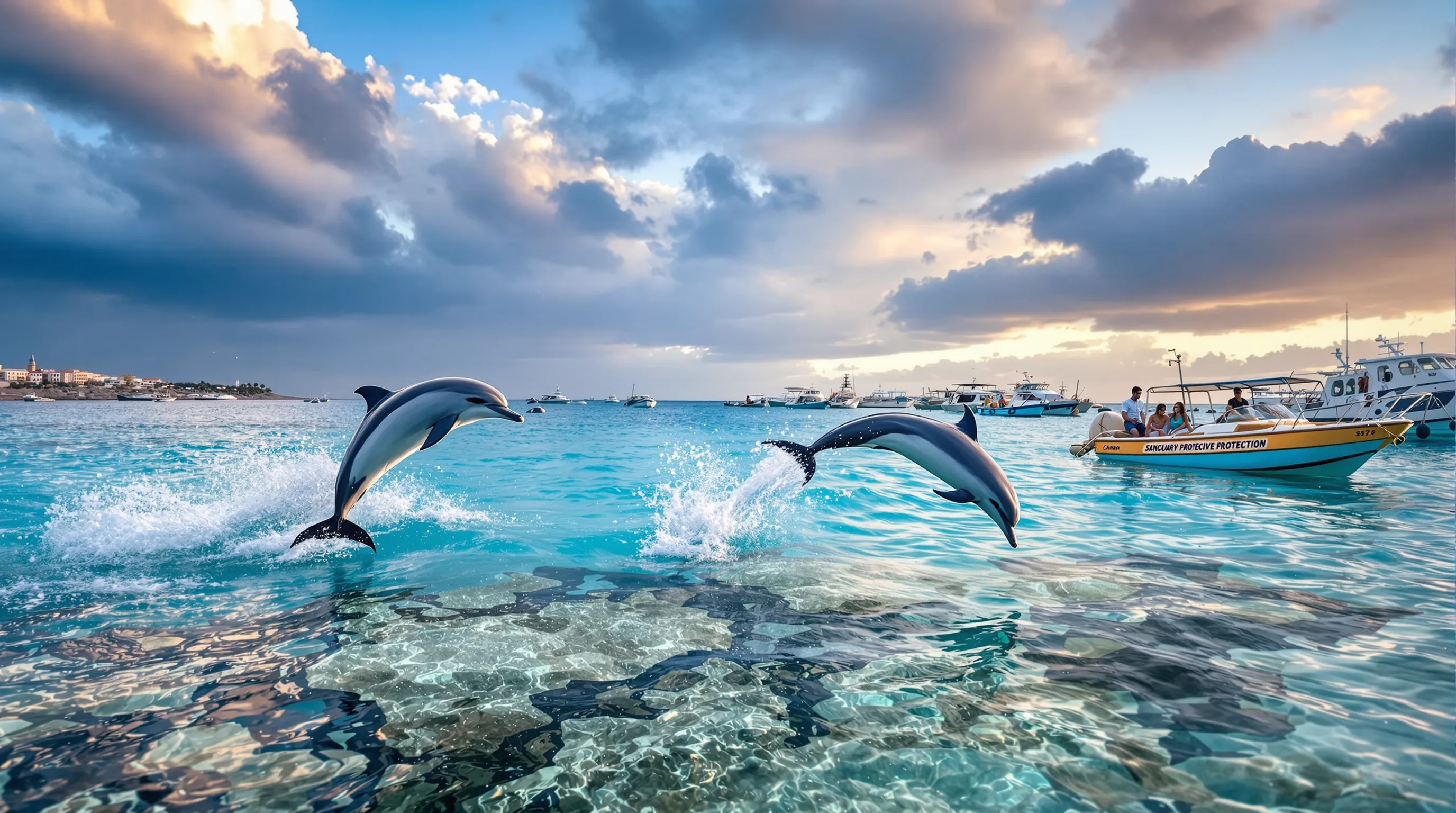
What Marine Sanctuaries Really Do to Save Dolphins
The Mediterranean Sea is home to 21 cetacean species, of which 8 are permanent residents. The Pelagos Sanctuary, established in 1999, protects 87,500 km² of waters between France, Monaco and Italy. This area concentrates 40% of Mediterranean marine biodiversity. Each summer, over 8,000 striped dolphins frequent these waters, alongside sperm whales, pilot whales and fin whales. Despite these efforts, ship strikes, noise pollution and ghost nets still threaten 25% of populations. Protection initiatives are multiplying to preserve this unique ecosystem.
The Pelagos Sanctuary: Unique Cross-Border Protection
The Pelagos Sanctuary represents the first international agreement for protecting marine mammals in the high seas. This area extends from the Giens Peninsula to southern Tuscany, encompassing the French Riviera, Monaco and Liguria. The deep waters of Monaco's canyon and upwellings create an exceptional ecosystem. Krill flourishes thanks to cold currents rising from the depths, attracting large whales. French, Monégasque and Italian authorities coordinate surveillance and regulation. Over 150 scientists study populations using satellite tags and acoustic analysis. Results show stabilisation of dolphin populations since 2015, after decades of decline. This international cooperation serves as a model for other Mediterranean zones.
Enhanced protection zones
Three sectors benefit from increased surveillance: Monaco's canyon, the waters around Port-Cros island and the Ligurian zone. These sectors concentrate 60% of large cetacean sightings. Navigation is regulated with speed limits of 10 knots to reduce collision risks.
Modern Surveillance and Protection Technologies
New technologies are revolutionising Mediterranean cetacean protection. The REPCET system alerts ships in real-time to whale presence, reducing collision risks by 40% since 2009. Submersible hydrophones record cetacean songs and clicks 24/7, enabling mapping of their movements. Artificial intelligence automatically analyses these sounds to identify species. Drones equipped with thermal cameras monitor sensitive areas without disturbing the animals. Satellite tags placed on large cetaceans reveal their migration routes and feeding areas. This technology has revealed that fin whales travel up to 2,000 km between their summer and winter feeding grounds.
Tourism Impact and Regulatory Measures
Over 500,000 tourists participate in cetacean watching annually in the western Mediterranean. This activity generates £40 million in revenue whilst raising public awareness. However, uncontrolled development threatens the animals. Since 2020, operators must comply with the High Environmental Quality charter: minimum distance of 100 metres, approach from behind, maximum 30 minutes observation. Sanctuaries have created a certification scheme to distinguish responsible providers. Fines can reach £125,000 for rule violations. Associations regularly train skippers and guides to improve practices. This regulation reconciles economic development with species preservation.
Tourist operator certification
The 'Responsible Whale Watching' label certifies 85 Mediterranean operators. These professionals commit to respecting distances, speeds and approach durations. They also participate in citizen science programmes by transmitting their observations to researchers via dedicated apps.
Practical Tips for Responsible Tourism
Choose certified operators displaying the 'High Quality Whale Watching' label to guarantee cetacean respect. The best period runs from June to September, with peak activity in July-August. Book in advance as trips are limited to 12 passengers maximum since 2021. Expect to pay £30-40 for a 3-hour trip departing from Nice, Antibes or Sanary. Weather conditions strongly influence sightings: calm seas and winds under 15 knots are ideal. Bring sun cream, water and seasickness medication. Observation probabilities reach 85% in summer for dolphins, 60% for pilot whales and 30% for fin whales. Follow onboard instructions and avoid sudden movements that disturb the animals.
Frequently asked questions
Which cetacean species can be observed in the Mediterranean?
The Mediterranean hosts 21 cetacean species. Most frequently observed are striped dolphins, Risso's dolphins, pilot whales, sperm whales and fin whales. Orcas and long-finned pilot whales are rarer but occasionally present near French and Italian coasts.
What's the best period for whale watching in the Mediterranean?
The optimal period runs from June to October, with a peak in July-August. Fin whales are more present from June to September to feed on krill. Sperm whales remain year-round but are more active at surface during warmer months. Weather conditions are also more favourable in summer.
How do marine sanctuaries concretely protect cetaceans?
Marine sanctuaries impose strict regulations: ship speed limitations, temporary exclusion zones, enhanced pollution controls. They coordinate surveillance through patrols, automatic alert systems and permanent scientific monitoring. Sanctions can reach £125,000 for serious infractions.
Mediterranean cetacean protection combines technological innovations, international cooperation and responsible tourism. These efforts are bearing fruit with population stabilisation since 2015. Each visitor can contribute by choosing certified operators and respecting regulations. Discover these marine giants whilst respecting their environment on dauphin-mediterranee.com and participate in their preservation.
Read also
7 Secret Beaches Along the French Riviera That Even Locals Don't Know
Discover 7 secret beaches along the French Riviera untouched by mass tourism. Ex...
Why PACA Sunset Cruises Transform Your Evening Experience
Discover sunset cruises in PACA: Marseille, Nice, Cannes. Prices, schedules and ...
7 Secrets of Common Dolphins That Marine Biologists Guard Jealously
Discover the 7 secret behaviours of Mediterranean common dolphins that only mari...
7 secrets que les pros utilisent pour capturer la magie sous-marine méditerranéenne
Découvrez les techniques secrètes des photographes professionnels pour réussir v...